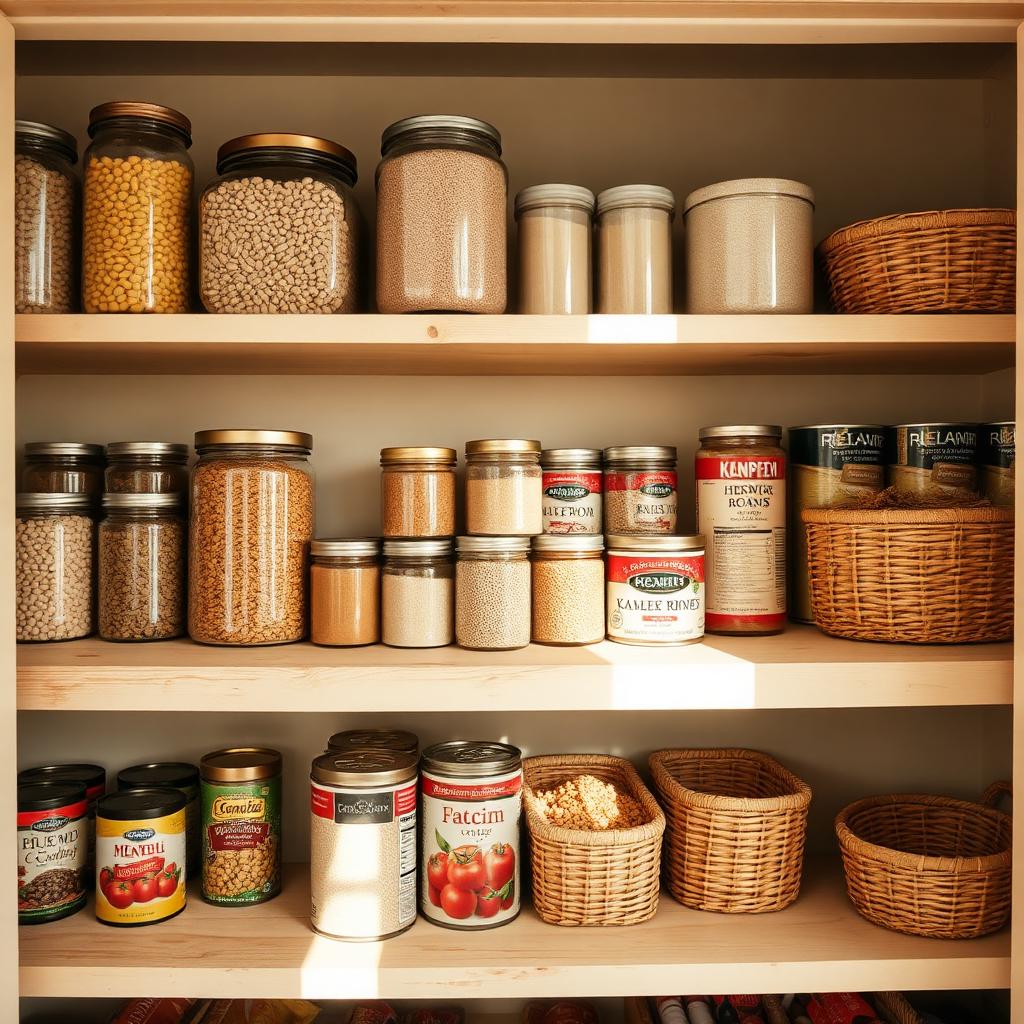
A supportive pantry is not a display of matching jars or expensive “superfoods.” It is a collection of ingredients that help you make something satisfying when the day has not gone according to plan.
The purpose is not to stock everything. It is to know what you have, what you enjoy, and which foods can meet you on a low-energy evening.
Start with meals, not categories
Before making a shopping list, name five simple meals you or your household genuinely eat.
For example:
- Beans, rice, salsa, and vegetables
- Pasta with tomatoes, greens, and cheese
- Soup with bread
- Eggs with toast and fruit
- Oatmeal with nuts and frozen berries
- Tuna, chickpea, or white-bean salad
- Curry with rice and frozen vegetables
Your pantry should support your meals—not someone else’s ideal kitchen.
Grains and meal bases
- Rice
- Oats
- Pasta or noodles
- Tortillas
- Crackers
- Shelf-stable bread or bread in the freezer
- Other culturally familiar grains or starches
Proteins and satisfying additions
- Beans, lentils, or chickpeas
- Canned fish or chicken
- Nut or seed butter
- Nuts and seeds
- Shelf-stable tofu where available
- Other foods that suit your needs and preferences
Vegetables and fruit
- Canned tomatoes
- Low-sodium canned vegetables
- Unsweetened canned or jarred fruit
- Dried fruit
- Frozen vegetables and fruit
- Onions, garlic, potatoes, squash, or other produce suited to storage
Flavor builders
- Olive oil or another preferred cooking fat
- Vinegar or lemon juice
- Broth
- Herbs and spices you actually use
- Soy sauce, salsa, mustard, tahini, curry paste, or another familiar condiment
- Salt and pepper
No ingredient is mandatory. Allergies, medical needs, culture, budget, access, and taste should shape the list.
Create three “no-recipe” combinations
Use this flexible pattern:
Base + protein + produce + flavor
Examples:
- Rice + beans + frozen corn + salsa
- Pasta + chickpeas + canned tomatoes + herbs
- Toast + nut butter + fruit + cinnamon
- Broth + lentils + frozen vegetables + curry spices
- Crackers + tuna or white beans + pickles + mustard
Write your three combinations inside a cabinet door or in your phone. The list is most valuable when your decision-making energy is low.
Shop for continuity
Before buying more:
- Check what is already open.
- Move older items to the front.
- Look at dates and package condition.
- Buy amounts you can realistically store and use.
- Label freezer items with the name and date.
- Avoid decanting foods if doing so removes useful cooking, allergen, or expiration information.
A regenerative pantry reduces friction and waste where practical, but it does not demand perfection. Convenience foods can be part of a supportive kitchen.
Include the backup meal
Keep at least one meal that requires almost no preparation. It might be canned soup, frozen food, beans and rice, cereal and milk, a shelf-stable meal, or another dependable choice.
The backup meal is not evidence that planning failed. It is evidence that the plan understands real life.
Food-safety note
Discard leaking, bulging, badly dented, or otherwise compromised cans. Follow package storage instructions. Refrigerate foods after opening when required. If a food’s safety is uncertain, do not taste it to decide.
Sources & further reading
External links open in a new tab. Referenced sources support background reading and do not sponsor The Regenerative Table.