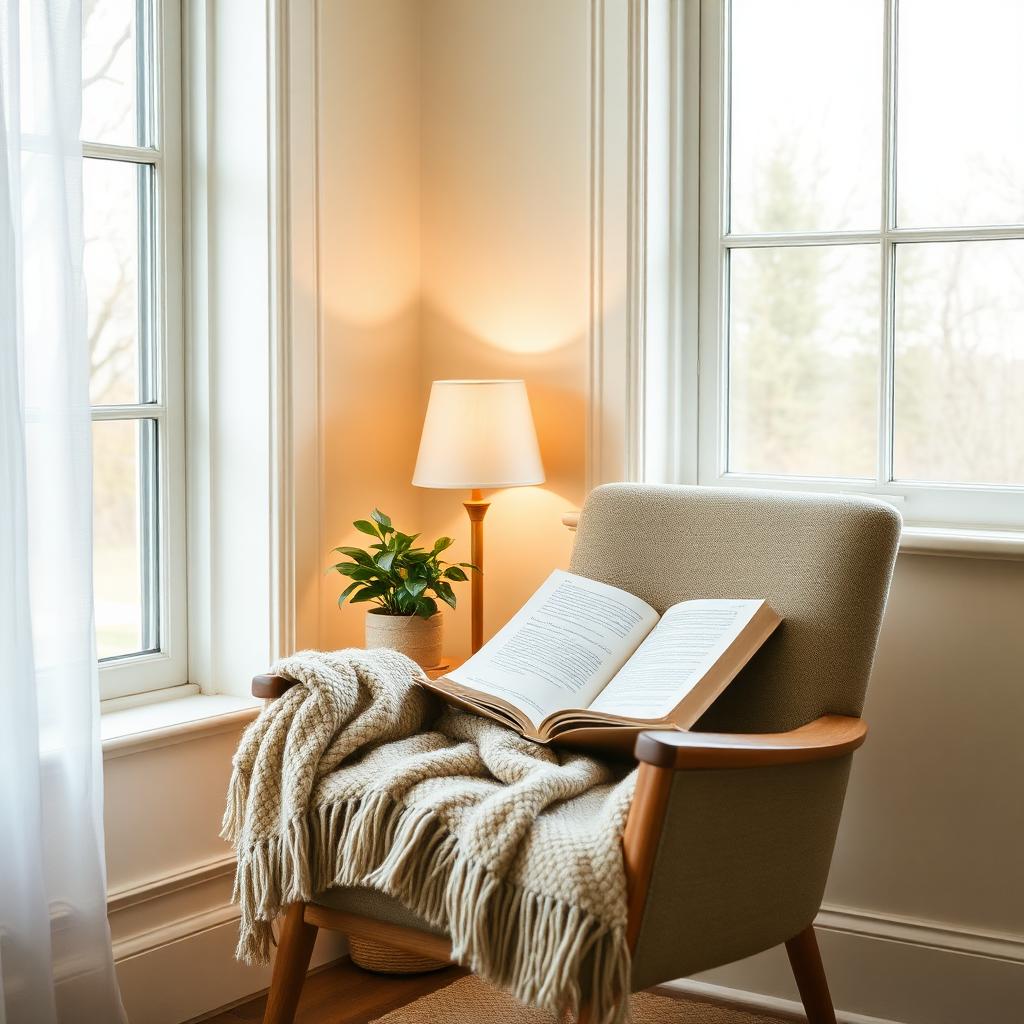
Wellness imagery often gives us enormous windows, empty counters, pale furniture, and rooms untouched by ordinary life. Most homes do not look like that. They hold laundry, bills, mobility equipment, toys, pets, roommates, noise, work, and the evidence that people actually live there.
A restorative corner is not a design achievement. It is one small area arranged to reduce friction and offer support.
Choose the place you already pause
Look for a chair, bedside table, section of couch, kitchen seat, porch step, or spot near a window. Do not choose the place you think should become peaceful. Choose the place your body already visits.
Ask:
- Can I sit or stand here comfortably?
- Is it reasonably safe and accessible?
- What usually interrupts the usefulness of this space?
- What do I wish were within reach?
Remove one demand
Do not empty the entire room. Remove one thing that creates unnecessary work:
- A pile that belongs elsewhere
- A broken object
- Visual clutter directly in your sightline
- A chair covered with items
- A notification-producing device
- Packaging or dishes that can be cleared
The goal is not minimalism. It is to give your attention slightly less to manage.
Add one source of support
Depending on your needs, add:
- A comfortable pillow or blanket
- Water
- A lamp with gentle, useful light
- A book or journal
- Headphones
- Tissues
- Prescribed medication stored safely and appropriately
- A charging cable
- A basket for the objects that gather there
- A plant or natural object
- A photograph that creates genuine warmth
Support should be practical before it is decorative.
Work with the senses
Notice sound, light, temperature, texture, and scent.
Could you:
- Lower or redirect a harsh light?
- Open a curtain during the day?
- Reduce one repetitive noise?
- Add a soft texture?
- Adjust airflow or temperature?
- Choose fragrance-free options if scents are irritating?
People with migraines, asthma, allergies, sensory sensitivities, trauma histories, or other conditions may need very different environments. “Calming” is personal.
Give the corner a purpose
Let this be the place where you do one or two things:
- Drink morning tea
- Take a three-minute pause
- Read
- Call someone you love
- Complete the evening check-in
- Sit after arriving home
- Look out the window
- Do nothing on purpose
Too many expectations will turn the corner into another assignment.
A ten-minute reset
- Remove trash or dishes.
- Return five items to where they belong.
- Wipe one surface.
- Refill the water or tissue supply.
- Adjust the light.
- Sit for one minute before leaving.
Sources & further reading
External links open in a new tab. Referenced sources support background reading and do not sponsor The Regenerative Table.