Hydration advice often arrives as a number: drink this many glasses, finish this enormous bottle, never mistake thirst for hunger. But bodies, climates, foods, medications, health conditions, activity levels, and seasons are not identical. A single rule cannot describe what every person needs.
At The Regenerative Table, hydration begins with relationship rather than arithmetic. It asks us to notice thirst, routine, environment, and the many ways fluid enters a day.
Hydration has more than one doorway
Plain water is an important and practical choice, but it is not the only contributor. Soups, fruits, vegetables, milk, unsweetened teas, broths, and other beverages can all provide fluid. Foods such as melon, citrus, berries, cucumbers, tomatoes, leafy greens, and cooked vegetables bring water to the table along with flavor and nourishment.
This does not mean every drink supports every person equally. Alcohol can impair judgment and affect hydration. Caffeine affects people differently. Sweetened drinks may not match someone’s goals or medical needs. The point is not to label beverages good or bad. It is to make choices with awareness.
Let the day remind you
Instead of forcing hydration into one determined burst, connect it to moments already present:
- A glass of water after waking
- A beverage with each meal
- Tea during an afternoon pause
- Water before leaving the house
- A refill after movement or time outdoors
- Soup, fruit, or vegetables as part of a meal
These anchors allow hydration to become rhythm rather than another task requiring constant willpower.
Try one anchor
Pick a single moment to attach a drink to this week:
- After waking
- With meals
- During the afternoon transition
- After movement or time outdoors
Make water easier to meet
Small environmental changes can matter:
- Keep a glass or bottle where you naturally spend time.
- Use a vessel that is comfortable to hold and clean.
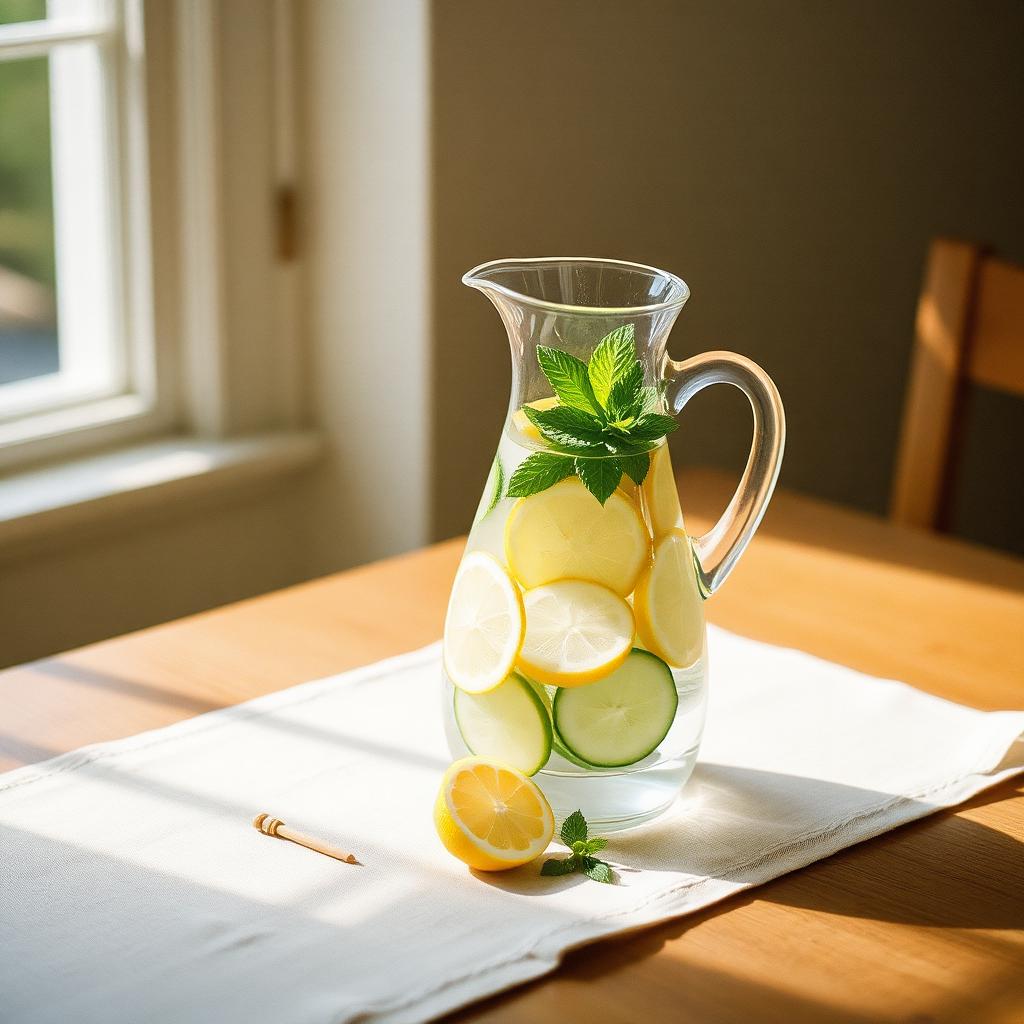
- Add lemon, citrus peel, cucumber, mint, berries, or another flavor you enjoy.
- Adjust the temperature. Some people drink more when water is cold; others prefer room temperature or warm tea.
- Keep a filled pitcher visible at meals.
- Carry water when weather, travel, or activity makes access less predictable.
The best container is not the most impressive one. It is the one you will actually use.
Notice without becoming watchful
Thirst can be a helpful cue, but it is not the only consideration. Hot weather, exercise, fever, vomiting, diarrhea, pregnancy, breastfeeding, medications, and some health conditions can change fluid needs.
Rather than monitoring yourself anxiously, practice light curiosity:
- Have I had anything to drink in the last few hours?
- Is the room or weather especially warm?
- Have I been moving, sweating, or talking for a long time?
- Would a drink feel supportive now?
Persistent excessive thirst, very limited urination, confusion, faintness, or other concerning symptoms deserve medical attention. People with kidney, heart, liver, endocrine, or fluid-balance conditions may need individualized guidance and should not follow generalized hydration targets without consulting their healthcare team.
Sources & further reading
External links open in a new tab. Referenced sources support background reading and do not sponsor The Regenerative Table.